Concrete Cutting and Core Drilling in Wollongong
Get a Free EstimateWollongong Concrete Cutting Services
Sometimes you need to make a clean, precise opening in solid concrete, and that’s where professional cutting comes in. It’s used for doorways, windows, stairwells, drainage lines, expansion joints, and removing sections for repairs or renovations. Concrete cutting in Wollongong demands the right equipment, careful planning and plenty of experience, because mistakes can be costly and potentially dangerous.
Modern wall saws, wire saws, floor saws and core drills allow us to cut accurately with minimal vibration, noise and dust, protecting the surrounding structure. We always check for hidden services such as pipes and cables before we start, keeping your site safe. Whether it’s a small residential job or a large commercial project, we’ll get it done neatly and efficiently. Get in touch to discuss what you need cut.
Concrete Cutting Jobs Across Wollongong
New Doorways and Window Openings
Adding a door, window, pet flap or servery to a besser block or poured wall? After your builder has props or lintels in place, we saw the opening straight and square so the frame fits snugly and the plasterer or renderer has hardly anything to make good.
Core Holes for Services
Round, clean holes through slabs, walls and suspended floors for drains, split-system lines, solar cabling and exhaust ducts. We size each core to the fitting so it can be sealed tight, which counts in Wollongong where wind-driven rain and salty air work their way into any gap left open.
Cutting Out Broken Panels
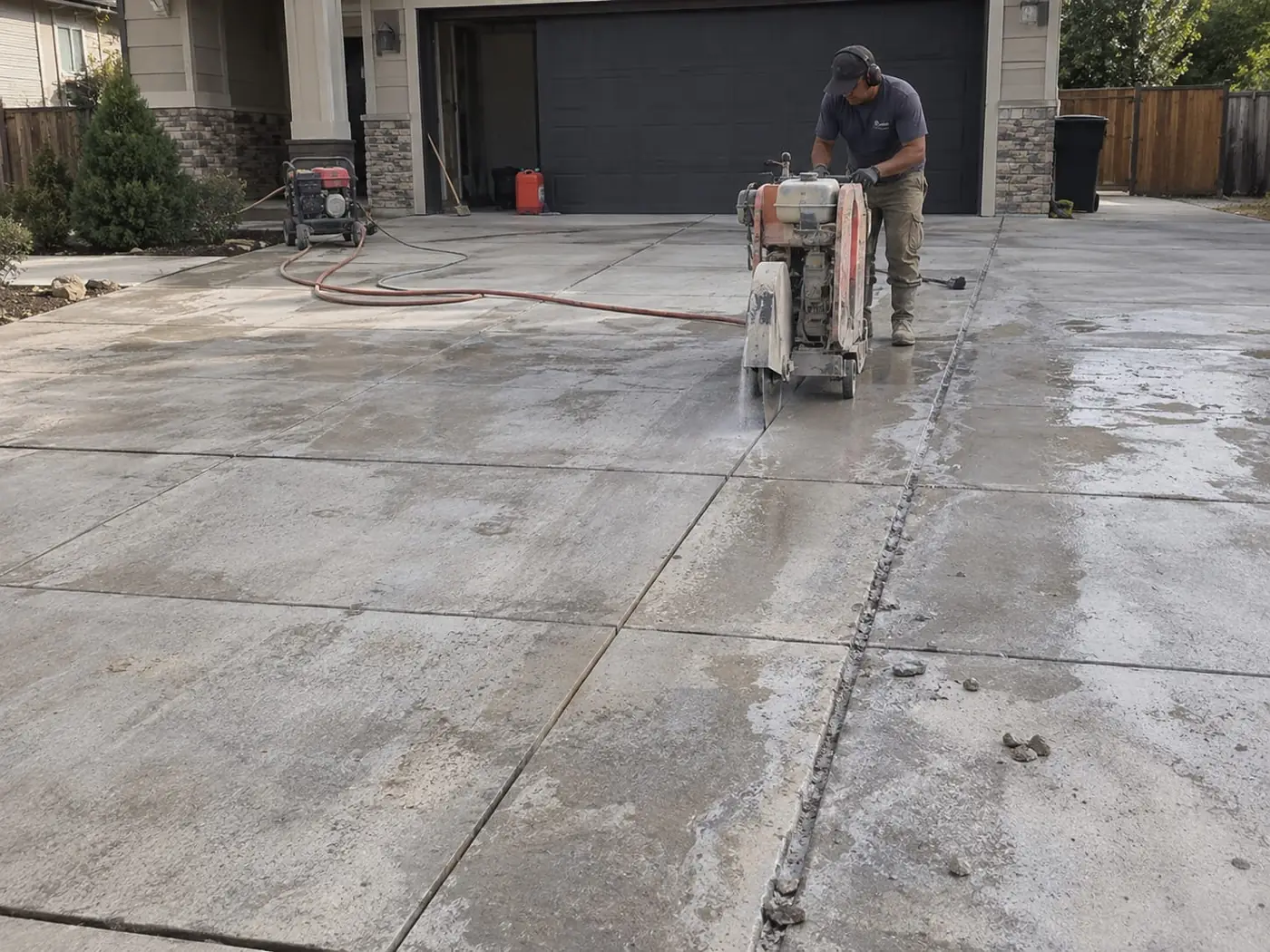
When one panel of a driveway, path or patio has sunk or cracked up, we cut around it so only that piece is removed. The same approach works for trimming a slab back to widen a driveway, fit a garden bed or set a pool fence footing without disturbing the rest.
Plumbing Trenches in Slabs
Your plumber needs to relocate a drain, add an ensuite during a reno or get conduit out to the shed? We cut narrow channels through garage, laundry and driveway slabs with twin parallel saw lines, then break out between them so the trench is tidy and easy to fill and patch.
Kerb and Footpath Cuts
For a new crossover, we cut the kerb and gutter or the existing footpath to the width council has approved. If an old crossover is being shifted or widened, we trim that back too and leave a clean, straight edge for the concreters to form against.
Anti-Slip Grooving
Shallow saw grooves across steep driveway ramps, garage aprons and pool decks give tyres and shoes something to bite on in the wet. On escarpment blocks where a smooth slab turns slick in heavy rain or under mould, it's a cheap fix that avoids resurfacing everything.
How to Book Concrete Cutting in Wollongong
Whether it's a new doorway, a fresh plumbing run or a section of slab that has to go, good cuts begin with good information. Use any of the steps below to let us know what the job involves.
- Mark the cut line: Chalk or spray the line where you want the cut, photograph it from two or three angles and send the pictures through.
- Send any service plans: If you have plumbing or electrical drawings, pass them on so we know roughly where pipes and cables sit before we scan.
- Fill in the contact form: Let us know whether it's a floor, wall or driveway and about how thick it is, and we'll explain which saw suits.
Working inside an occupied house or a trading shop needs a bit more care, so we sort out slurry control, noisy work hours and access with you before starting. Older fibro and brick homes around Wollongong can have pipes under the slab that never made it onto a plan, so we scan every time. Reach out and we'll put together your free quote.
What Sets Our Wollongong Cutting Crew Apart
Joints Sawn On Time
A new slab only gives you a short period to saw its joints. Go early and the edges ravel; go late and the slab picks its own crack lines. Warm, windy summer days around the Illawarra tighten that period, so we judge each pour by how it's setting, not by the clock.
Spacing Worked Out For You
If joints are too shallow or spaced too widely, cracks go wherever they want. We set depth and spacing based on the thickness and shape of your slab, so any movement shows up along the joint lines and not through the centre of a panel.
Blades Matched To The Concrete
Hard river gravel, softer aggregates, dense reinforcement and young concrete all call for a different diamond blade. Choosing well means sharper edges, less spalling along the cut and a saw that keeps tracking at an even pace.
Square Edges For Joining New Work
A jagged break between old and new concrete gives a weak, untidy seam. We cut a straight line right through, so the new pour sits against a solid, square face and the joint looks planned rather than patched.
Small Machines For Tight Spots
Plenty of local jobs mean narrow side paths, under-house spaces on sloping blocks and homes hard up against the boundary. Our smaller saws and core rigs can be hand-carried in where larger gear can't go, so the cut still lands exactly where it should.
Cleaned Out And Ready To Seal
After the control joints are sawn, we flush out the cutting dust and fines so a flexible sealant or joint filler can go in if you want it. A sealed joint keeps out grit, weeds and ants, and stops water getting underneath the slab.
A Look at Our Wollongong Concrete Work



Concrete Cutting FAQs
Questions Wollongong clients often raise about saw cutting, from when and where to cut control joints to handling slurry, sawing reinforced slabs and coring.
Generally the same day it's poured, sometimes only a few hours after finishing, though weather and setting speed change the timing. Saw too soon and the blade tears aggregate out of concrete that's still green, leaving frayed edges. Wait too long and the slab may have already cracked somewhere you didn't choose. A hot, gusty summer afternoon brings that point forward, while a cool, overcast winter morning gives more breathing room. Depth is just as important: a joint usually needs to reach about a quarter of the slab's thickness, otherwise it won't form the weakened line that cracking should follow.
A handy guide is two to three metres between joints for every 100mm of slab depth. A standard 100mm driveway would therefore have joints every 2 to 3 m, and a 125mm slab can go slightly further. Aim for panels that are roughly square, since long skinny panels often crack across the middle whatever the joints are doing. Re-entrant corners around steps, pits and posts gather stress and need a joint or added reinforcement. Layout matters even more on reactive clay or ground that holds water, and where an engineer has set a spacing, their design overrides any rule of thumb.
Both are straightforward to control when they're planned for. Wet sawing feeds water onto the blade to keep it cool and hold the dust down, but the grey slurry it makes will stain pavers, harm plants and must not go into the gutter or stormwater. We fence off the area, vacuum the slurry up and remove it for proper disposal. Dry sawing means no slurry, but it throws up fine silica dust, so it needs on-tool extraction and the right respirators. Whether the cut is indoors, beside garden beds or next to the car, we pick the cleanest method for the spot and explain it to you first.
No. Diamond blades go through rebar and mesh as well as the concrete, so steel doesn't stop us. It does slow the saw and wear out blades quicker, which affects the cost, so mention it early if you know the slab is heavily reinforced. With structural parts of a building, the question is less about whether it can be cut and more about whether it should be. Taking out part of a suspended slab, beam or load-bearing wall can change how loads are carried, and it may need sign-off from an engineer or certifier beforehand. If we suspect that applies, we'll flag it at quote stage rather than on the day.
Yes. Coring produces a neat, round hole at the exact diameter required, without the cracking and broken edges a hammer drill or jackhammer leaves behind. Common uses are plumbing and stormwater penetrations, electrical and data conduit, balustrade and pool fence posts, and holes for structural anchors. We drill through floors and walls across a broad range of sizes. Beforehand we find any reinforcement, pipes and cables in the concrete, from plans or a scan as required, so nothing unexpected turns up mid-drill. The finished hole is ready for your plumber or sparky to seal up.
Other services that pair with cutting
Got concrete that needs cutting?
Let us know where the line goes and roughly how thick the slab or wall is, and we'll book in a visit.